National Risk Management and Associates

  • Quote
  • Contact
  • Payment
  • Claims
  • Home
  • About
  • Personal
    • Wedding Insurance
    • Special Events Insurance
  • Business
  • Life and Health
  • Our Carriers
  • Resources
  • Blog

July 21, 2024 By Cendra Ray

Safe Grilling Tips

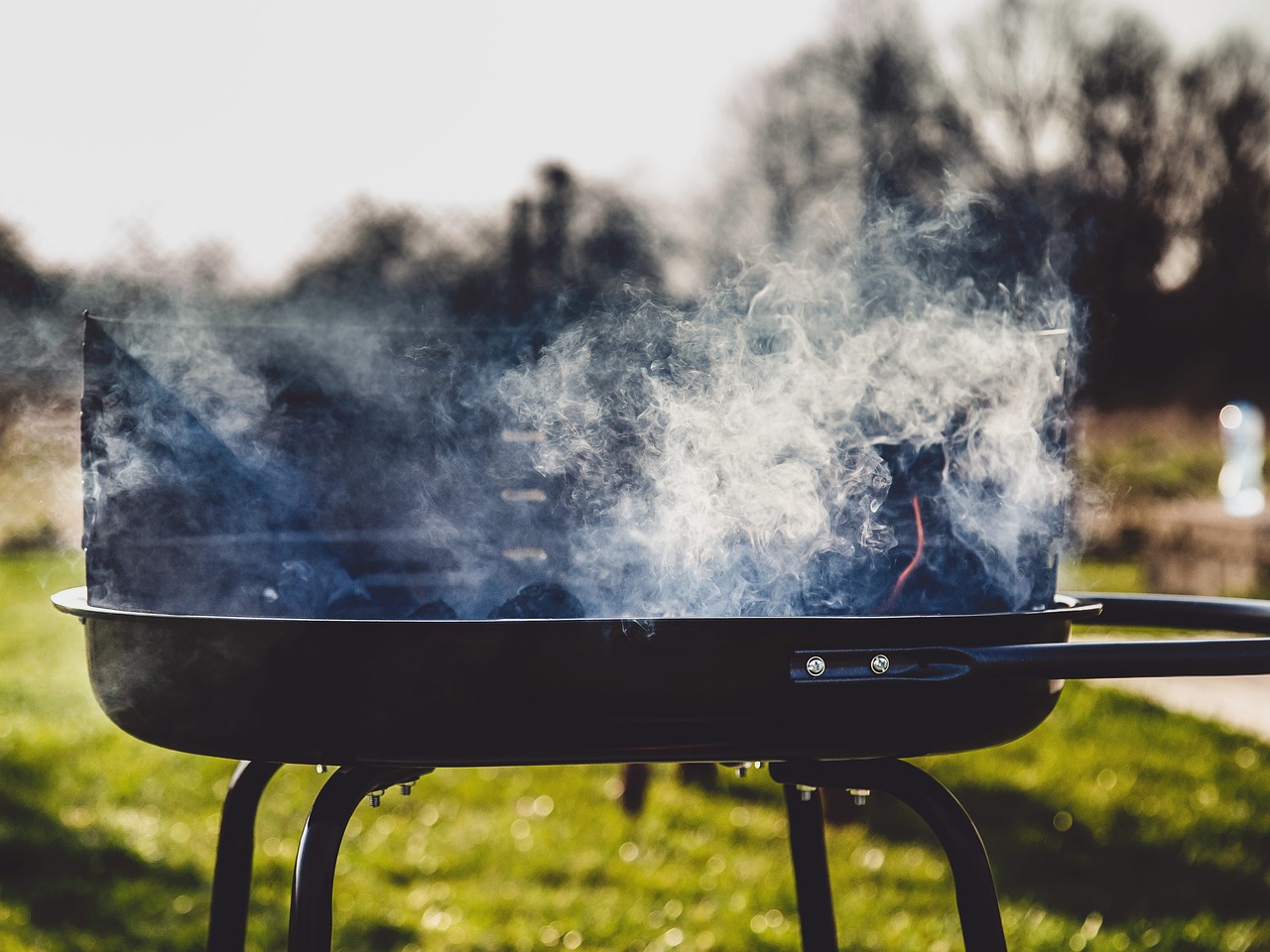
Grilling TipsCourtesy of iii.org

Every year, millions of Americans safely enjoy outdoor barbecues, but accidents do happen. According to the U.S. Fire Administration, about 5,700 grill fires take place on residential property every year, causing an annual average of $37 million in damage, 100 injuries and 10 deaths. The majority of grill fires are caused by malfunctioning gas grills. In addition, thousands of people visit emergency rooms every year because they have burned themselves while barbecuing.

In the rare instance of a grill fire spreading to your property, your homeowners insurance would provide financial protection as fire is a covered peril. A homeowners policy covers the following:

  • Damage to the house itself.
  • Damage to personal possessions such as lawn furniture.
  • Damage to insured structures on your property, such as a shed or gazebo.
  • Injuries to a guest, under the liability portion of the policy.

Keep in mind you’ll have to pay your deductible before your insurance kicks in, so if damage is minimal and your deductible is high, it may not make sense to file an insurance claim.

However, the best way to enjoy a summer of outdoor barbecues is to take steps to prevent accidents, including maintaining your grill and using it safely.

Grill Maintenance and Storage

Gas grills are generally safe if they are properly maintained and checked for leaks. In some instances, grills are unsafe due to faulty design or construction. (You can search the website of the Consumer Product Safety Commission to see if there has been a recall on your grill.) When setting up at the start of each grilling season, the following tips can help ensure everybody’s safety:

  • Check grill hoses for cracks, holes and brittleness. Look for blockages as well, especially in the Venturi tube that runs to the burners. Clear blockages—caused by food drippings, spiders or insects—with a wire or pipe cleaner.
  • Run a soap solution (one part liquid soap, one part water) along hoses and at connections, then open the valve at your tank and check to make sure that gas isn’t escaping, which will be indicated by bubbles at the leaking points.
  • Adjust hoses as needed away from hot areas or where grease might drip on them.
  • Store propane tanks outside, away from your house. Always check to make sure valves are firmly turned off.

Safe Barbecuing Practices

When barbecuing, use common sense and follow these guidelines:

  • Operate your barbecue on a level surface, away from your house, garage and landscaping. Don’t move the grill once it is lit.
  • Keep children and pets away from ther grill.
  • Protect yourself—or whoever is doing the grilling—with a heavy apron and oven mitts that reach high on the forearm.
  • For charcoal grills, use only lighter fluid designed for grilling. Never use gasoline or other flammable liquids, and never add more lighter fluid once the fire has started.
  • Never grill indoors or in enclosed areas. Charcoal grills produce carbon monoxide (CO) fumes, which can be fatal in unventilated areas.
  • Keep a fire extinguisher nearby.
  • When you’re done with your cooking, remember that the grill will remain hot for a while. Don’t cover or store your grill until it has cooled, and soak coals with water before throwing them away.

In Case of an Accident

If a grill accident—or any kind of accident—does occur, injuries should be addressed immediately. Run cool water over minor burns, but do not cover injured areas with bandages, butter or salve. In the case of more serious burns, victims should visit the emergency room or an urgent care facility. If needed or when in doubt, call 911.

Once you have dealt with any injuries, assess your property damage and, if the situation calls for it, contact your insurance professional to discuss filing a claim.

Filed Under: Insurance, Insurance News

July 16, 2024 By Cendra Ray

What is Business Interruption Insurance?

Business Interruption InsuranceCourtesy of iii.org

Business interruption insurance can be as vital to your survival as a business as fire insurance. Most people would never consider opening a business without buying insurance to cover damage due to fire and windstorms. But too many small business owners fail to think about how they would manage if a fire or other disaster damaged their business premises so that they were temporarily unusable. Business interruption coverage is not sold separately. It is added to a property insurance policy or included in a package policy.

A business that has to close down completely while the premises are being repaired may lose out to competitors. A quick resumption of business after a disaster is essential.

  1. Business interruption insurance compensates you for lost income if your company has to vacate the premises due to disaster-related damage that is covered under your property insurance policy, such as a fire. Business interruption insurance covers the revenue you would have earned, based on your financial records, had the disaster not occurred. The policy also covers operating expenses, like electricity, that continue even though business activities have come to a temporary halt.
  2. Make sure the policy limits are sufficient to cover your company for more than a few days. After a major disaster, it can take more time than many people anticipate to get the business back on track. There is generally a 48-hour waiting period before business interruption coverage kicks in.
  3. The price of the policy is related to the risk of a fire or other disaster damaging your premises. All other things being equal, the price would probably be higher for a restaurant than a real estate agency, for example, because of the greater risk of fire. Also, a real estate agency can more easily operate out of another location.

Extra expense insurance

Extra expense insurance reimburses your company for a reasonable sum of money that it spends, over and above normal operating expenses, to avoid having to shut down during the restoration period. Usually, extra expenses will be paid if they help to decrease business interruption costs. In some instances, extra expense insurance alone may provide sufficient coverage, without the purchase of business interruption insurance.

Filed Under: Insurance, Insurance News

July 7, 2024 By Cendra Ray

Water Damage & Insurance

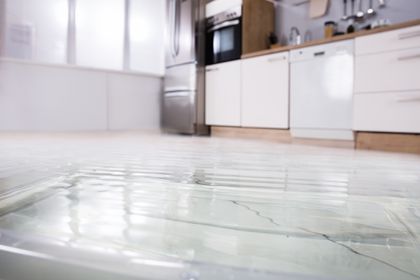
Water DamageCourtesy of iii.org

Pop quiz: what’s one of the most common types of homeowners insurance claims? (Hint: it’s not fire.)

It’s water damage. Maybe that’s not surprising – it rains a lot in many places. But what may surprise you is that things like pipe bursts and broken appliances are increasingly the main causes of water damage in homes.

In insurance-speak, these are called “non-weather water damage claims.” Worryingly, these claims are happening more often and are getting a lot more expensive. A Best’s Review article reports that the average homeowners water damage claim is now over $6,700. Large losses (over $500,000) have doubled in number over the past three years. Non-weather water damage is now costing insurers (and their policyholders) billions in losses every year.

This is happening for several reasons. Our housing stock is aging, as is our infrastructure. More houses are being built and they’re getting bigger – many houses now have extra bathrooms and second-floor laundry rooms, which means more piping. (The story is probably different in Florida. You can read why that is here.)

But the worst part is that many – if not most – water damage claims are preventable. Inspecting pipes or conducting routine maintenance can go a long way. That’s where the internet of things (IoT) comes in. Smart devices and connected sensors installed on piping can detect leaks before they occur or before they cause too much damage. They’re basically smoke detectors, but for water.

And they work. Best’s Review noted that installing IoT devices can reduce water losses by up to 93 percent.

The Review quoted an IoT company CEO who claimed that leak detection devices could save insurers and their customers $10 billion every year.

Homeowners have admittedly been slow to install IoT to help detect leaks. But insurers are hopeful that raising awareness about the issue, offering policyholder incentives like premium discounts, and encouraging IoT installation during home construction will begin to turn the tide.

Update: Of interest, Washington state adopted a rule in 2018 that specifically mentions water monitors and water shut-off systems as permissible tools for an insurer’s risk reduction program.

Filed Under: Insurance, Insurance News

June 30, 2024 By Cendra Ray

Condominium Insurance

Insuring a co-op or condoCourtesy of iii.org

Because co-op and condominium owners share their building structures, two policies—a master policy and an individual policy—are required to fully protect all parties involved. Learn more about insuring a co-op or condo.


If you are purchasing a condo or co-op, the bank will require insurance to protect its investment in your home, and your co-op or condo agreement will likely require you to have insurance, as well. There are actually two different policies necessary to fully insure co-ops and condos—a master policy for the building, and an individual policy to cover you for liability, to protect your belongings and to insure any apartment structural elements that are not covered by the master policy.

Here’s what you need to know about each type of insurance.

The master co-op or condo policy

This is the policy that protects the entire apartment structure; the building management is responsible for it and its premiums come out of your maintenance fee or association dues. The master policy covers the common areas you share with others in your building like the roof, basement, elevator, boiler and walkways for both liability and physical damage.

In some cases, the association is responsible for insuring the individual condo or co-op units, as they were originally built, including standard fixtures. In these instances, the individual owner is only responsible for insuring alterations to the original structure of the apartment, like a kitchen or bathroom remodel.

In other co-ops or condos, the association is responsible only for insuring the bare walls, floor and ceiling. In the event of a disaster, the owner is responsible for elements like kitchen cabinets, built-in appliances, plumbing, wiring, bathroom fixtures etc.

It is important to know which structural parts of your home are covered by the condo/co-op association master policy and which are not, so you can properly insure your apartment through your individual policy. This information should be in your association’s bylaws and/or proprietary lease, which can usually be obtained from the co-op or condo board, or from the company that manages the building. If you have questions, talk to your co-op board, condo association, insurance professional or family attorney.

Your individual co-op or condo insurance policy

Your mortgage lender and your co-op or condo by-laws will likely require that you have your own insurance on top of the master policy because your ability to repair your apartment after a disaster protects the value of the unit.

An individual policy provides coverage for your personal possessions and for any structural elements not covered by the master policy if you are the victim of fire, theft or other disaster listed in your policy. Like a standard homeowners policy, you also get liability and, likely, additional living expenses (ALE) protections.

It’s a good idea to find an insurance professional who has experience in co-ops and condominiums. When selecting a policy, don’t forget to ask about available discounts, such as for extra bolts on the doors or additional fire alarm systems. If you insure your unit with the same company that underwrites your building’s insurance policy, you might also get an additional reduction in premiums.

To adequately insure your home and protect your assets, you may also want to consider the following, additional coverages. Consult your insurance professional for advice on what’s right for you.

  • Unit assessment reimburses you for your share of an assessment charged to all unit owners as a result of a covered loss. For instance, if there is a fire in the lobby and all the unit owners are charged the cost of repairing the loss.
  • Water backup insures your property for damage by sewer backups or drain back ups—these are not covered by either your co-op/condo policy or your flood policy.
  • Umbrella liability is an inexpensive way to get more liability protection and broader coverage than is included in a standard condo/co-op policy.
  • Flood insurance or earthquake insurance may be necessary if you live in an area prone to these disasters.
  • Floater for additional coverage for expensive jewelry, furs or collectibles.

Filed Under: Insurance, Insurance News

June 17, 2024 By Cendra Ray

Business Income & Severe Weather Events

Business Insurance Courtesy of iii.org

Courtesy of iii.org

With predictions of an above-average hurricane season issued by Colorado State University this week, businesses need to take measures to prepare and increase their chance of surviving, according to the Insurance Information Institute (I.I.I.).

Forty percent of businesses do not reopen after a disaster and another 25 percent fail within one year, according to the Federal Emergency Management Agency (FEMA). But by taking action now to prepare, businesses can increase their chance of getting back on their feet financially and keeping their doors open.

The I.I.I. and the Insurance Institute for Business & Home Safety (IBHS) recommend the following steps:

Develop a Business Continuity Plan

Having a business continuity plan is vital for companies to prepare for, survive and recover from a hurricane. Use IBHS’ free OFB-EZ® (Open for Business) business continuity planning tool to create a plan that focuses on recovering after the initial emergency response. Share your plan with employees, assign responsibilities and offer training so your workforce can collaborate in the recovery of your business. Conduct regular drills to assess and improve response.

Maintain Key Information Offsite

To get your business up and operating as quickly as possible after a disaster, you’ll need to be able to access critical business information. In addition to backing up computer data, keep other critical information offsite such as your insurance policies, banking information and phone numbers of employees, key customers, vendors and suppliers, your insurance professional and others. If you have a back-up site, make sure it’s sufficiently far away so as not to be affected by the same risks that threaten the primary location. Use IBHS’ free EZ-PREPTM severe weather emergency preparedness and response planning toolkit with checklists that can be customized for your company to be sure you have a well-organized plan and are ready to respond when disasters occur.

Create a Business Inventory

Include all business equipment, supplies and merchandise—and don’t forget commercial vehicles.

Review Your Insurance Coverage

The time to review your insurance policy is before disaster strikes and you have to file a claim. It is important that your business have both the right amount and type of insurance for its needs and risk profile. There are two types of policies you can buy as a business owner:

A Business Owner Policy (BOP) is commonly used by small businesses. BOP policies combine property and liability coverage in one policy and are usually less comprehensive than a commercial policy.

A Commercial Multi-peril (CMP) policy combines several coverages—such as commercial property, liability, inland marine and commercial auto—into a single policy. It is typically less expensive to buy a CMP policy than to buy the coverages individually.

Opt for Replacement Cost Coverage

Most commercial property policies provide either replacement cost coverage, actual cash value coverage, or a combination of both. Replacement cost coverage will pay to rebuild or repair property, based on current construction costs. Actual cash value coverage will pay to rebuild or replace the property minus depreciation. Depreciation is a decrease in value due to wear and tear or age. If your business is destroyed and you only have actual cash value coverage, you may not be in a position to completely rebuild.

Consider Tenant Coverage

If you rent or lease a building, consider tenant coverage, which will insure your on-premises property, including machinery, furniture and merchandise. The building owner’s policy will not cover your contents.

Don’t Forget About Flood Insurance

Flooding is not covered by standard commercial insurance policies, so consider buying a separate flood policy. If you’re located in a high- to moderate-risk flood zone, you could be protecting your business from devastating financial loss. Commercial flood coverage is available from the National Flood Insurance Program (NFIP) and provides up to $500,000 in building coverage and $500,000 for contents. You can also get coverage through private insurers.

Visit the Business Insurance section of the I.I.I. website for more information.

RELATED LINKS

Facts and Statistics: Catastrophes

Articles: When Disaster Strikes: Preparation, Response and Recovery; Does My Business Need Flood Insurance?

SOURCES:

Colorado State University

Insurance Institute for Business & Home Safety

National Flood Insurance Program

National Hurricane Center

Seasonal Hurricane Predictions

Small Business Administration

Filed Under: Insurance, Insurance News

  • « Previous Page
  • 1
  • …
  • 18
  • 19
  • 20
  • 21
  • 22
  • …
  • 30
  • Next Page »

Quick Contact

(407) 767-2950

Business Hours

Monday – Friday: 9 AM- 5 PM


  • Privacy Policy
  • Accessibility statement

24 Hour Hotline: (407) 415-8528

National Risk Management & Associates
220 Magnolia Avenue
Sanford, FL 32771
Phone: (407) 767-2950


Designed by iWebResults

Copyright 2026 National Risk Management, All Rights reserved